Plan your visit

At Bihar Museum, we strive to create an immersive and interactive experience for all visitors. Our doors are open to all who seek to be inspired and enriched by the mysteries of history and the transformative power of art. Immerse yourself in the colossal past and treasury of Indian history at Bihar museum.

Visit information

HOURS
  • Closed on Mondays
  • Galleries : 10:00am – 5:00pm
  • Children’s Gallery, Children’s Café, Museum Shop, Library : 10:00am – 7:00pm
  • Restaurant : 10:00am – 9:00pm
  • Special evening discounted ticket after 5pm
  • Closed on Mondays
  • Holiday Closures: Selected religious and national holidays
  • ADDRESS
  • Nehru Path, Patna, Bihar 800001, India
  • Bihar Museum is around 10 min away from Patna Airport & Patna railway station
  • Tickets

    REGULAR VISIT 10:00 AM - 5:00 PM
    Indian Adult
    ₹100
    Indian Children
    ₹50
    International Adult
    ₹500
    International Children
    ₹250
    School Group Tour
    ₹25*
    *Per student
    EVENING TICKETS 5:00 PM - 7:00 PM
    Indian Adult
    ₹50
    Indian Children
    ₹25
    International Adult
    ₹500
    International Children
    ₹250
    Got questions related to visit & tours?
    Write to us at
    Tickets

    REGULAR VISIT 10:00 AM - 5:00 PM
    Indian Adult
    ₹100
    Indian Children
    ₹50
    International Adult
    ₹500
    International Children
    ₹250
    School Group Tour
    ₹25*
    *Per student
    EVENING TICKETS 5:00 PM - 7:00 PM
    Indian Adult
    ₹50
    Indian Children
    ₹25
    International Adult
    ₹500
    International Children
    ₹250
    Got questions related to visit & tours?
    Write to us at
    Galleries


    Visitors tips
    BUSY HOURS
    LAST ENTRY
    AFTER HOUR FACILITIES
    Visitors tips
    BUSY HOURS
    LAST ENTRY
    AFTER HOUR FACILITIES
    Tours & group visits

    Highlights of the museum
    Guided tactile tours
    Tailored tour for students (3-15yrs)
    PAID
    Highlights of the museum
    Guided tactile tours
    Tailored tour for students (3-15yrs)
    PAID

    What to see & do

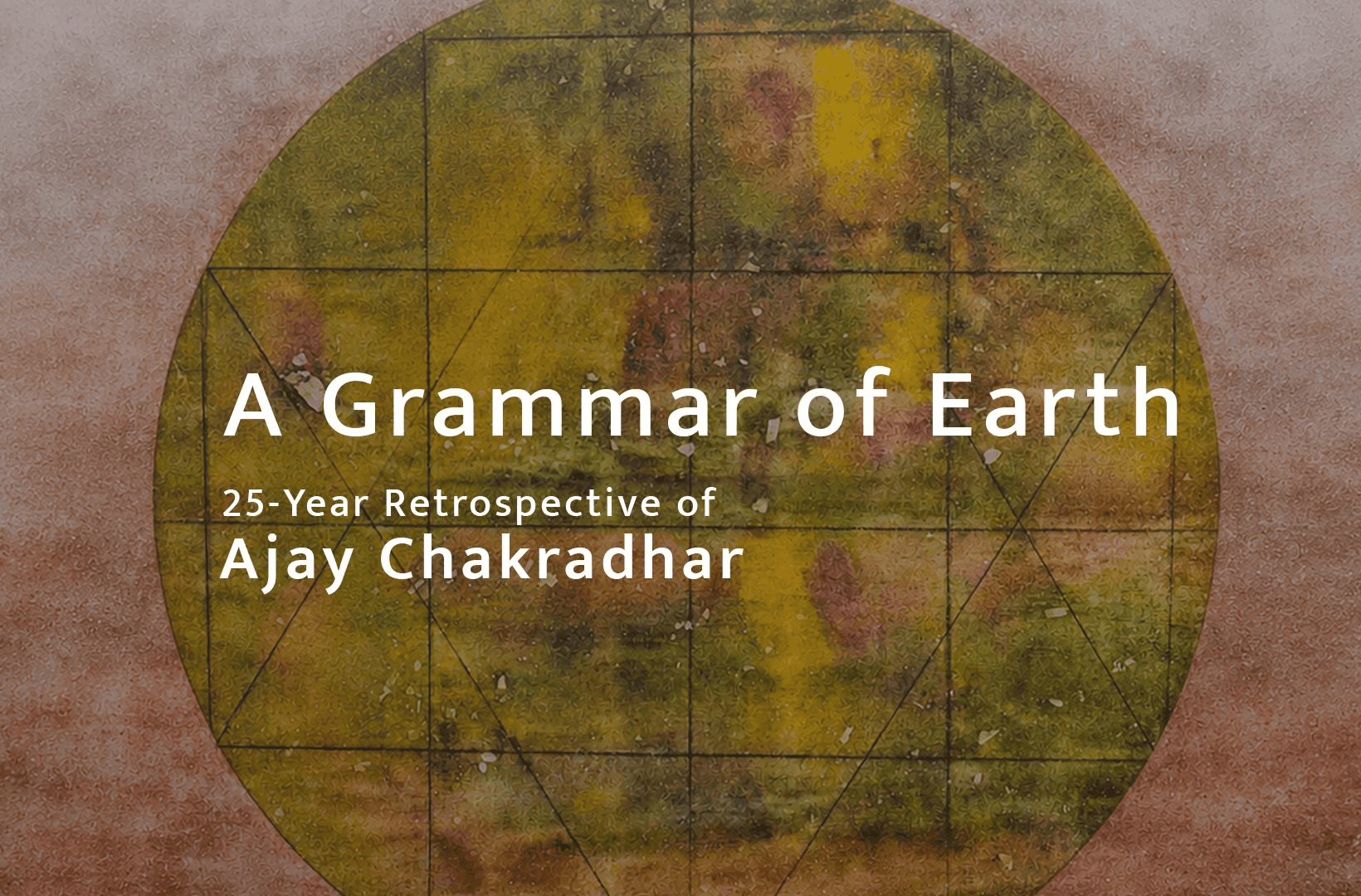
    A Grammar of Earth
    Exhibition

    25 Nov- 13 Dec 2026

    A Grammar of Earth

    Art of Ajay Chakradhar: twenty-five years in mica, canvas and paper Most retrospectives follow a line through time. This one is more like a cut through the ground, with layers that carry the weight of those above them. For twenty-five years, Ajay Chakradhar has kept his attention on the surface. He does not paint pictures of land. He makes the land behave like a page. Mica is at the heart of his work. This shiny mineral splits into thin, glassy sheets, and he turns each one into a kind of script. Cut into strips and set in rows, the sheets look like tablets or account books, written in a language no one speaks any more. These works look like text, but we cannot read them. That is their subject: memory as writing that outlasts its meaning. One shape keeps returning, the circle. It may be a dark disc, a pale coin of mineral or a moon sinking into black. It is the only gesture that closes, and it closes around an absence. In the tall canvases, two dark upright forms stand like doorways to a home whose people have gone. Then the work grows lighter. On paper, see-through sheets overlap until the surface becomes light itself. A drawn or stitched lattice holds almost nothing. Earth that has been dug, crushed and bound remembers how it was handled. A broken shard speaks of the vessel it once was. Chakradhar’s fragments carry the same intelligence. To walk through this exhibition is to move from dense darkness to translucent light. We learn to read what cannot be read, and find that the unreadable is also a form of tenderness.
    Exhibition
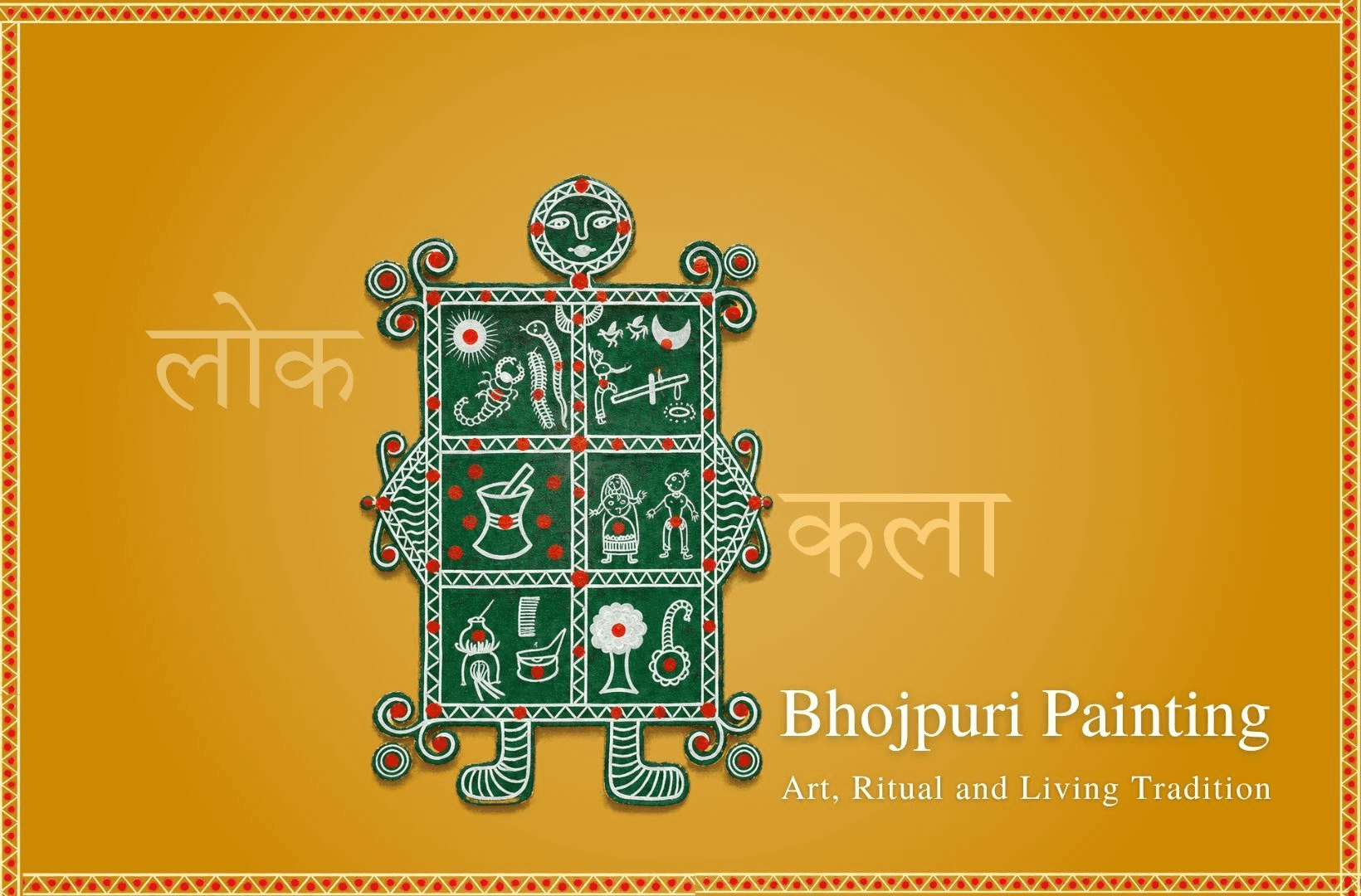
    Bhojpuri Painting: Art, Ritual and Living Tradition
    20 Nov- 25 Nov 2026

    Bhojpuri Painting: Art, Ritual and Living Tradition

    Bhojpuri painting grows out of the home life of the Bhojpuri region. It brings together art, belief and community. Women have traditionally made these paintings on the walls, floors and courtyards of their homes. They marked weddings, festivals and other auspicious occasions. The forms are bold and clear, with confident lines, geometric patterns, repeated motifs and colours drawn from nature. These paintings were more than decoration. They made the home a place of welcome, prayer and shared celebration. The tradition has several distinctive forms. Chauka purana, also called aripan, is made at thresholds and in courtyards. It invites good fortune and prosperity. Kohbar paintings belong to marriage and to the room where a newly married couple begin their life together. Their lotus, bamboo, fish, birds and vessels carry wishes for harmony, fertility, well-being and continuity. Pidhiya is a month-long observance. Women make figures and images for the welfare of the family, especially the health and long life of their brothers. They gather to sing traditional songs as they work. These practices live on through making and passing down. Knowledge moves from one generation to the next. Each artist also brings her own imagination to familiar motifs. The paintings reflect a close bond with farming, nature and the rhythm of the seasons. They are communal too. Women worked together, and painting became part of village social life.

    See MOre
    Exhibition
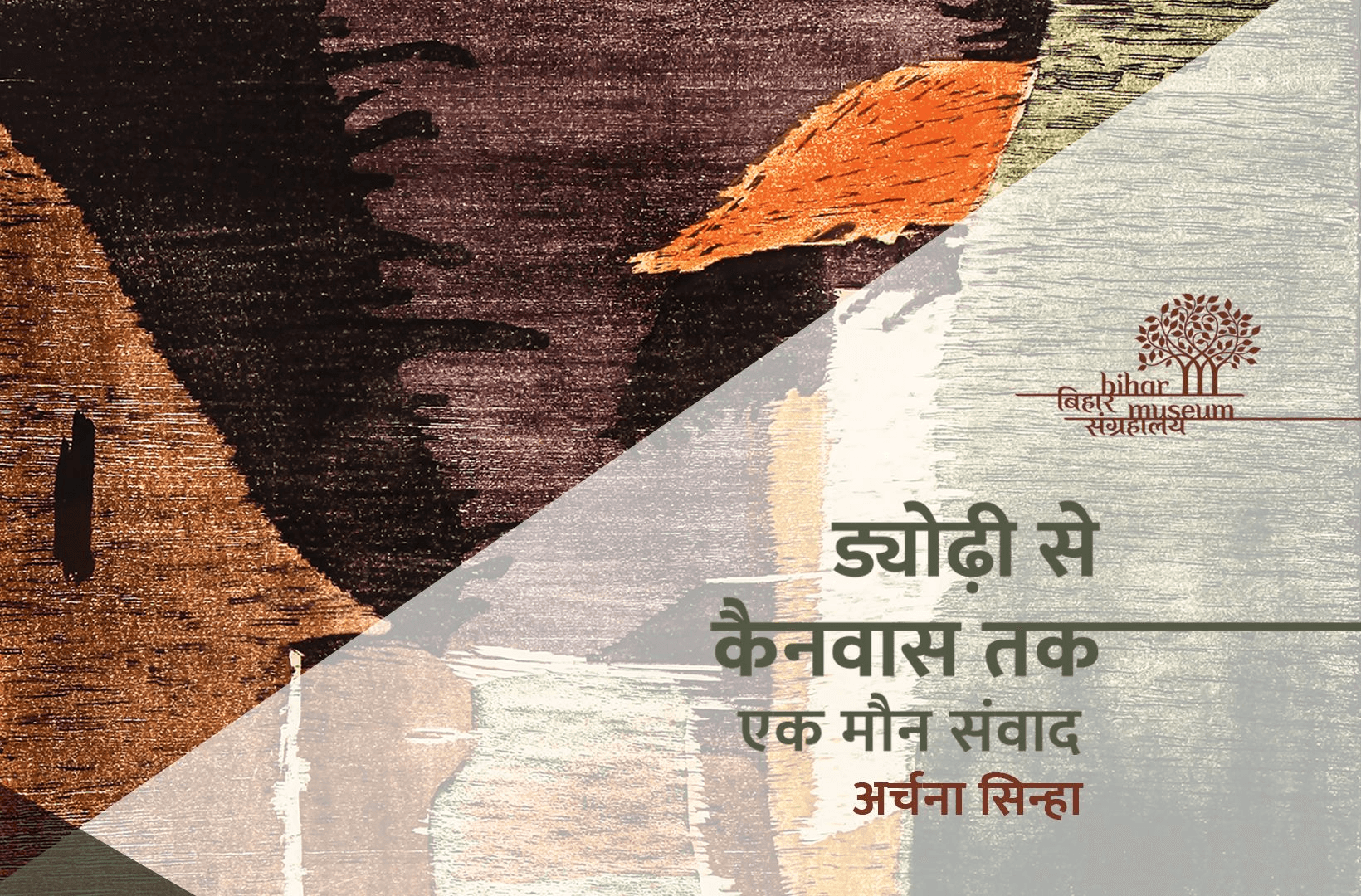
    Deorhi se Canvas Tak
    19 Nov, 2026 to 17 Dec, 2026

    Deorhi se Canvas Tak

    Archna Sinha is one of the senior women artists of contemporary Bihar. She has been active for almost four decades. This retrospective brings together her drawings, prints, paintings, sculptures, installations and photographs. Printmaking is her first and truest love. On canvas, she turns to faith. Mantras and Vedic symbols appear in saffron, red and gold. In her prints, sculptures and installations, she turns to the earth. We see thatched huts, women at work in the fields and everyday objects of village life, from the grinding stone to wooden sandals. Her etchings have fine lines and deep shadows. Bold linocuts and rough, energetic woodcuts sit beside them. Photographs of the Himalayas close the journey. Through nature, womanhood, labour and spirituality, her work draws our eyes to experiences that daily life often overlooks.

    See More

    Amenities

    First aid

    Visit our first-aid center for any medical assistance you may need

    Baby care center

    Avail our baby care facilities for a hassle-free time at the museum

    Wheelchair

    Wheelchairs are available at no cost on a first-come, first-served basis

    Audio guide

    Audio guides are temporarily unavailable until further notice

    Information desk

    Visitors can avail assistance at the front desk near the entrance

    Restroom

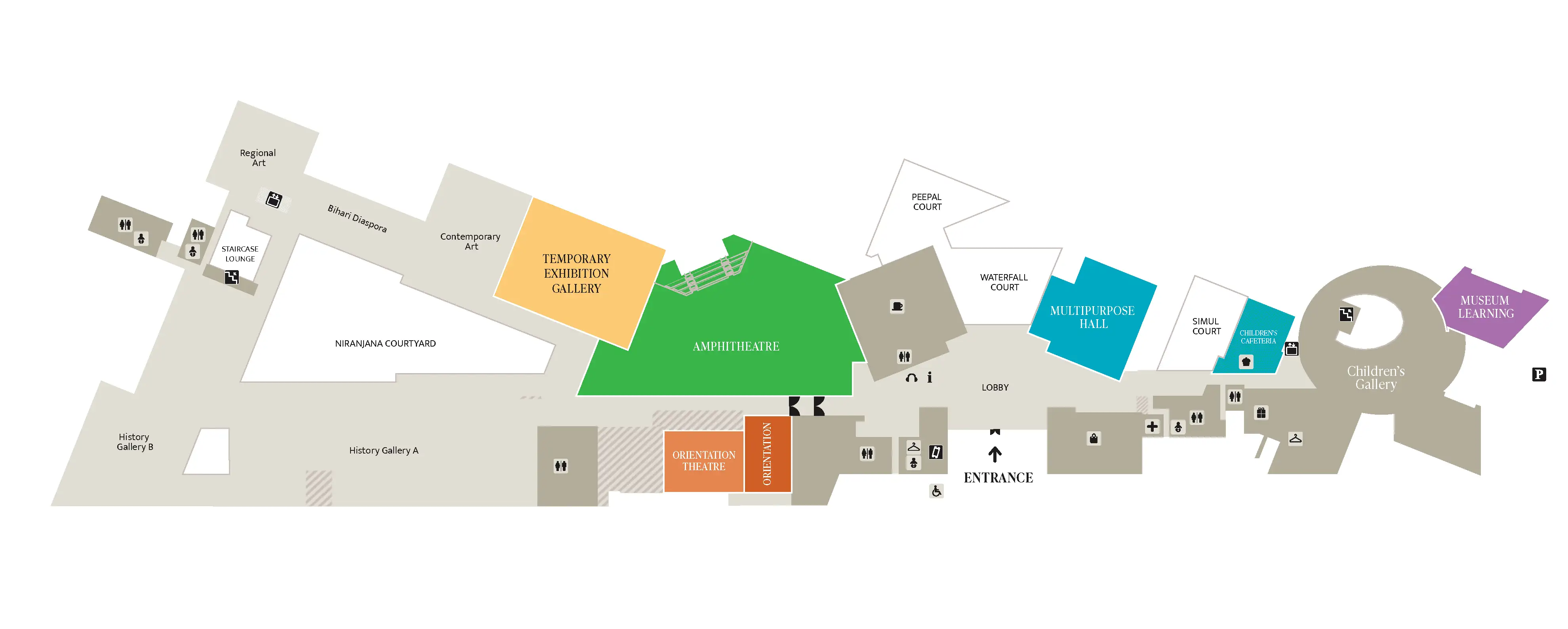
    Accessible restrooms are located on every level

    Baggage room

    Storage for luggage is available near the main entrance

    Cafeteria

    Experience the taste of Bihari cuisine at the museum restaurant

    Children’s eatery

    Grab a quick bite at the Children’s Gallery

    Ticket counter

    Tickets can be purchased at the physical counter near the entry gate

    Kid’s retail

    A range of kid-friendly souvenirs, toys and memorabilia available

    Museum shop

    Visit our in-house shop and buy traditional and artistic souvenir items.

    Drinking water

    Clean drinking water stations are located near restrooms to avoid use of plastic bottles

    Lifts

    Two accessible lifts are situated next to Bihari diaspora gallery

    Parking

    Parking for two and four wheelers is available at the museum premises

    Seating

    Seating is available at selected galleries, cafeteria and eatery

    Air conditioning

    The museum is centrally air-conditioned during all opening hours.


    Museum Map

    Museum map

    Stay Connected through our newsletter!

    Subscribe to our newsletter and get latest insights on history, art & culture in your inbox.

    Back to top